
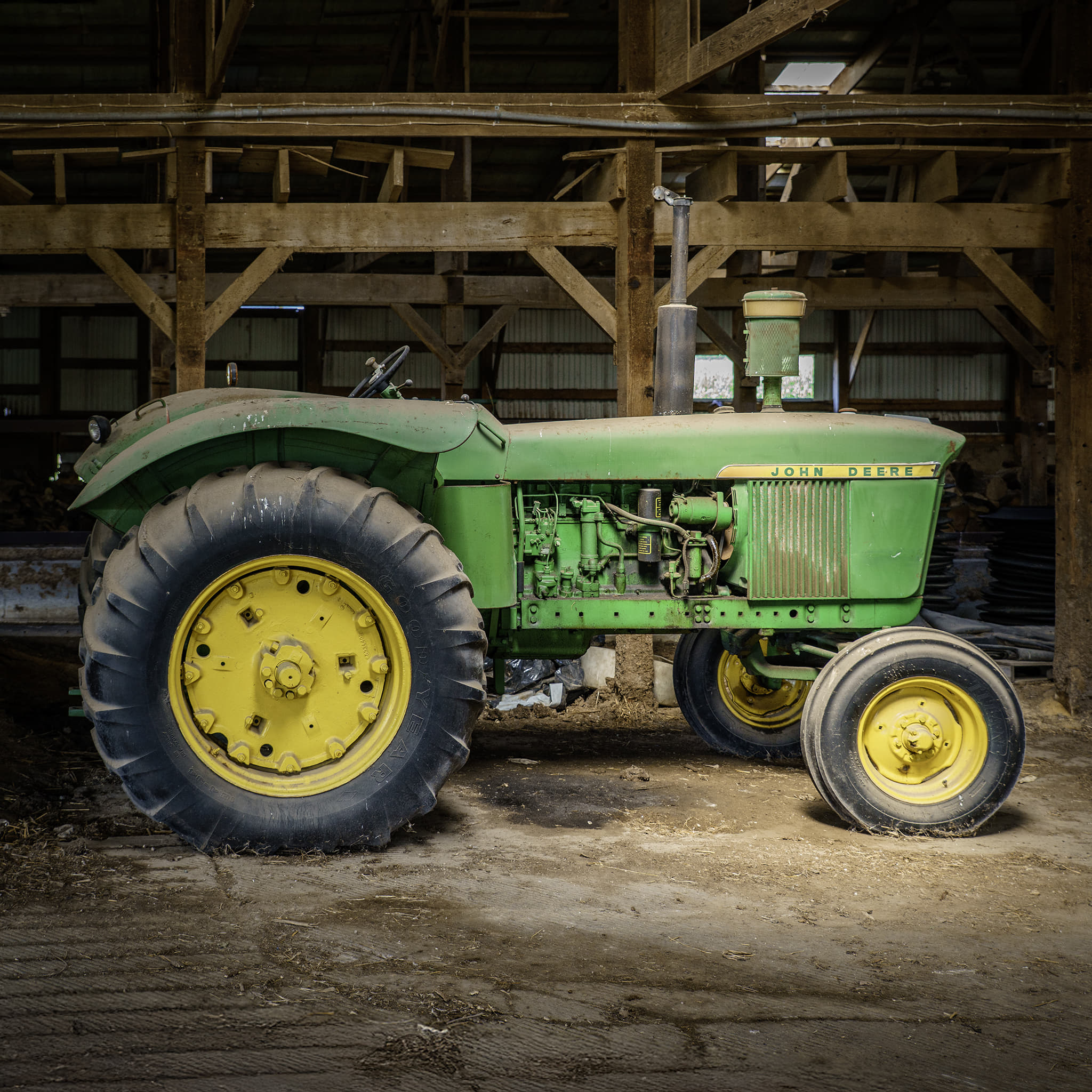
The John Deere 4020 is the most popular tractor in the auction market. Full stop.


ANALYSIS, AUCTION PRICES, INTERESTING IRON

Ryan Roossinck
January 14, 2026
The John Deere 4020 is the most popular tractor in the auction market. Full stop.
In 2025, more 4020s crossed the auction block than any other model (573 in our database, if you’re keeping score at home). Which makes sense. They built a pile of them, and they still sit in that sweet spot of “modern enough to work” and “old enough to be cool.”
So when I was digging through Tractor Zoom Pro last week, I wasn’t looking for problems. I was just poking around.
But I tripped over something that genuinely surprised me—in a good way.
What surprised me was how easy it is to influence the final sale price of a 4020, just by changing the way it’s described. No shenanigans, nothing sketchy.
Let me tell you how I got there.
A couple of weeks ago, I posted a video about the most commonly sold tractors of 2025. When I did, two comments popped up about the 4020 that sent me down a rabbit hole. One person asked, “What’s the price difference between a Power Shift and a Syncro?” A few comments later, another guy chimed in, saying, “Isn’t it less about the transmission and more about the year? In my experience, late models bring the money.”
Both are fair questions. So I pulled the data, and that’s where things got interesting.
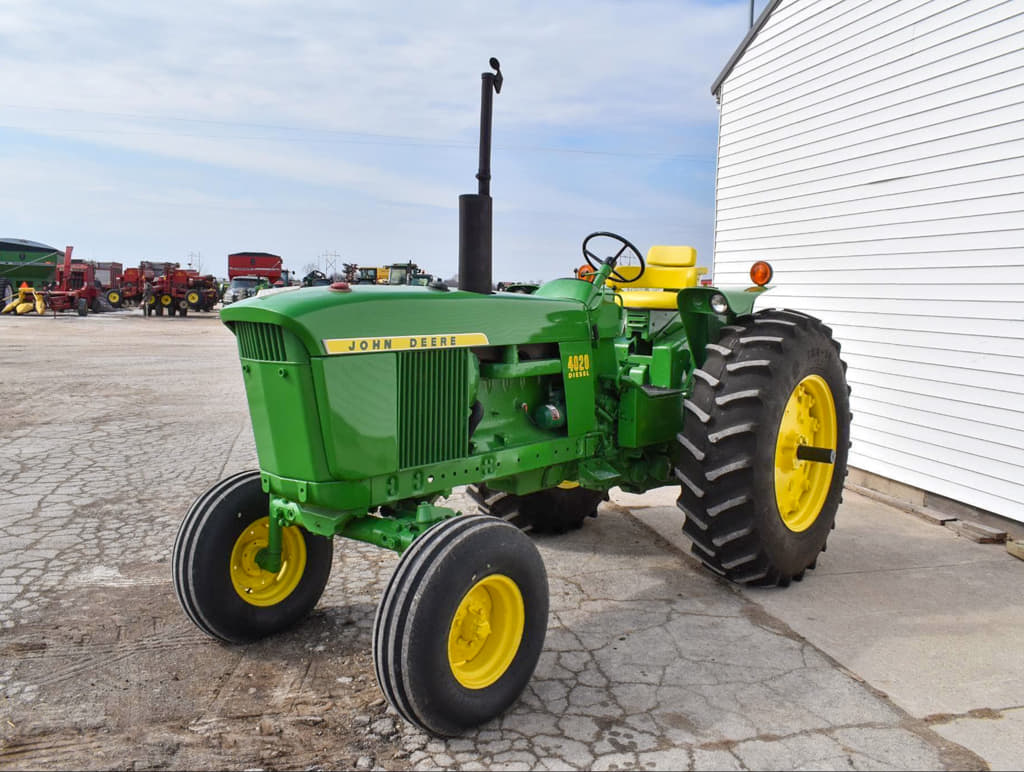
If you’ve spent any time around the 4020 crowd, you’ve probably heard the same two things over and over:
1972 models bring a premium.They’re the “best of the breed” – last year of production, most refinements, most desirable.
Power Shift transmissions bring a premium.
And honestly…both of those statements are true. The market loves ’72s, and it loves Power Shifts too (more on those in a minute).
First, let’s focus on ’72s.
I had Andy Campbell, our Director of Insights, work a little magic to only include garden-variety machines here; no duals, no loader tractors, no fancy front wheel assist models to influence the price. We also excluded the top and bottom 10% of sale prices so that we were working with a reasonably “average” subset of data. Then we grouped everything into three groups; ’72s, “not ’72s,” and unspecified, where the listing gave no year of production.
So, that said, here’s the raw averages, straight from our database.
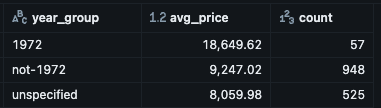
When you look at the raw numbers, it’s dramatic. The average ’72 model sells for at least $9400 more than any other category.
Now, before anyone sharpens the pitchforks and lights the torches, yes – taken at face value, that number is misleading.
That’s because there’s a right way and a wrong way to visualize the data; this is definitely the latter.
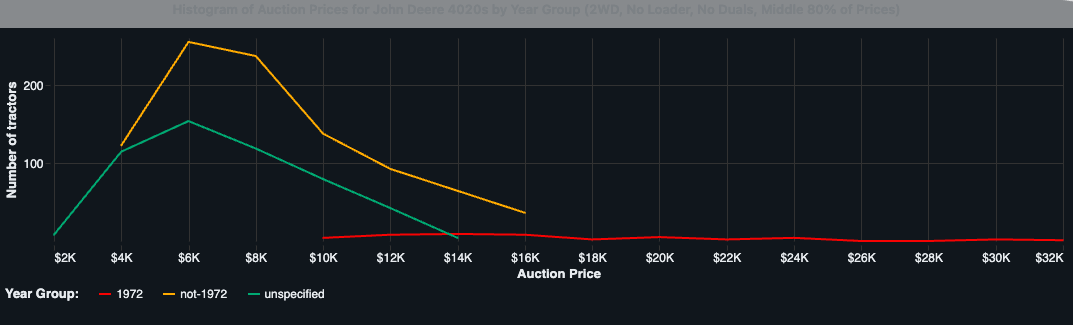
The histogram above tells a more accurate story. See, when you look at that, the first thing that jumps out is volume (the vertical axis). The red line (1972 models) is so close to the bottom because we don’t see nearly as many of them go to auction, which makes perfect sense. But…when a ’72 does show up, based on the fact that the red line shows up much further to the right on the horizontal axis (average auction price), it’s much more likely to be a higher-quality tractor. Better paint. Better tin. Better care over its lifetime.
At the end of the day, what you’re really seeing isn’t as much of a “1972 premium” as much as it is a condition bias.
Meanwhile, earlier years (the yellow line) show up in much larger numbers, and that pool includes everything from sharp, well-kept tractors to absolute farm beaters–and they sell for less. The green line represents 4020s where the listing doesn’t specify a year. They could still be nice tractors, but at the end of the day, they sell for the least.
What it boils down to is this:
1972s don’t bring more money just because they’re 1972.
They bring more money because the ones that go to auction are usually higher-quality units.
That distinction matters.
Now let’s talk about Power Shifts.
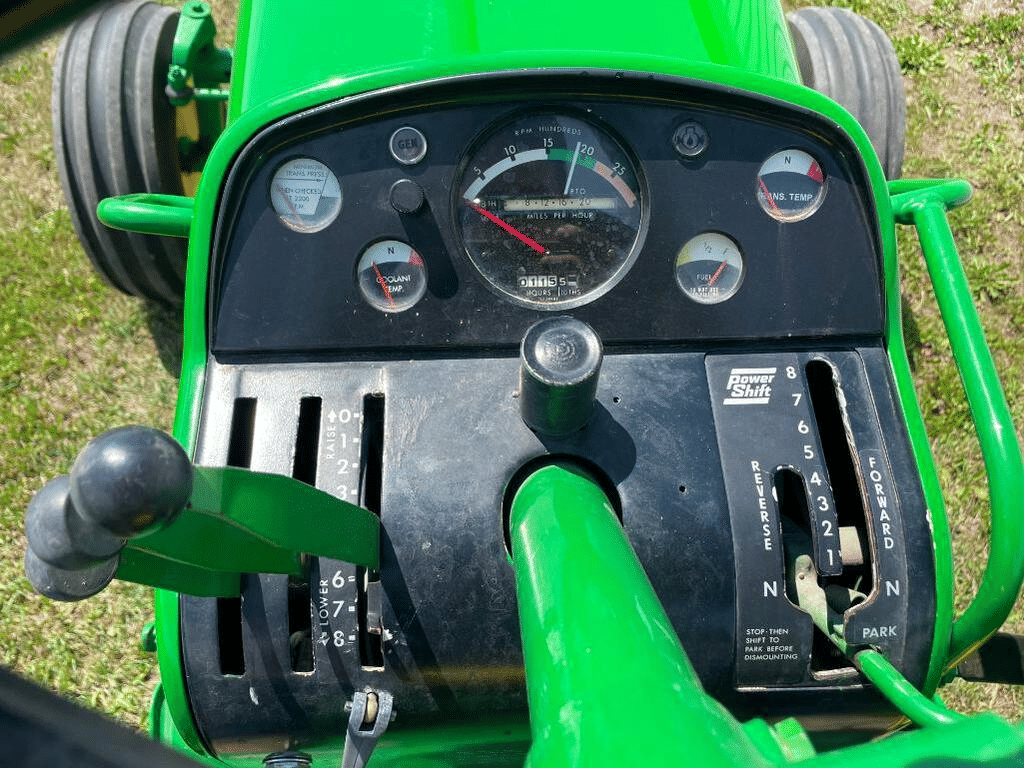
They always have and unless something really changes over the next few years, they probably always will. The demand is real, and buyers will pay for it. Over the past seven years, the average auction price of a 4020 where the listing mentioned a Power Shift (or any of the various spellings thereof) is about $9900 and a Syncro-Range is about $9360. If the transmission type was unspecified, it was $8044.
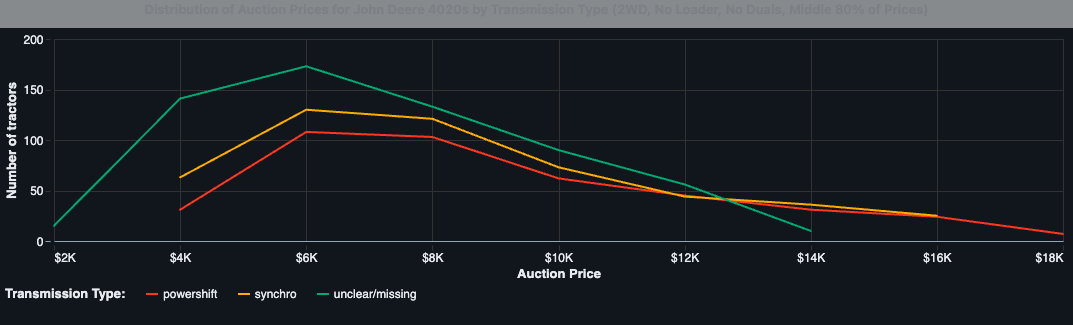
Just from an ad hoc perspective, that tracks fairly accurately. I think if given the opportunity, most 4020 buyers would happily spend an extra 600 bucks on a Power Shift.
But in all of these numbers, there’s a group that we haven’t talked about yet, and it’s the one that’s most eye-opening.

There’s a ton of 4020s that go to market every year with incomplete descriptions. On average, they consistently sell for thousands less than comparable machines with clear, complete descriptions. Sellers and auctioneers are leaving a lot of money on the table that they don’t need to.
It’s not because they’re worse or rougher machines, or because buyers don’t like them. It’s because buyers tend to skip over the ones with incomplete descriptions. That’s just how a competitive market works. A buyer who’s looking for a certain year or combo isn’t going to give an incomplete listing the time of day because they don’t have to. That’s the thing about 4020s; there’s always a handful of ’em available at any given time. And while I’m sure there’s probably a few buyers who’ll go through and look at every unit listed, that’s not typical behavior. Buyers can afford to be picky.
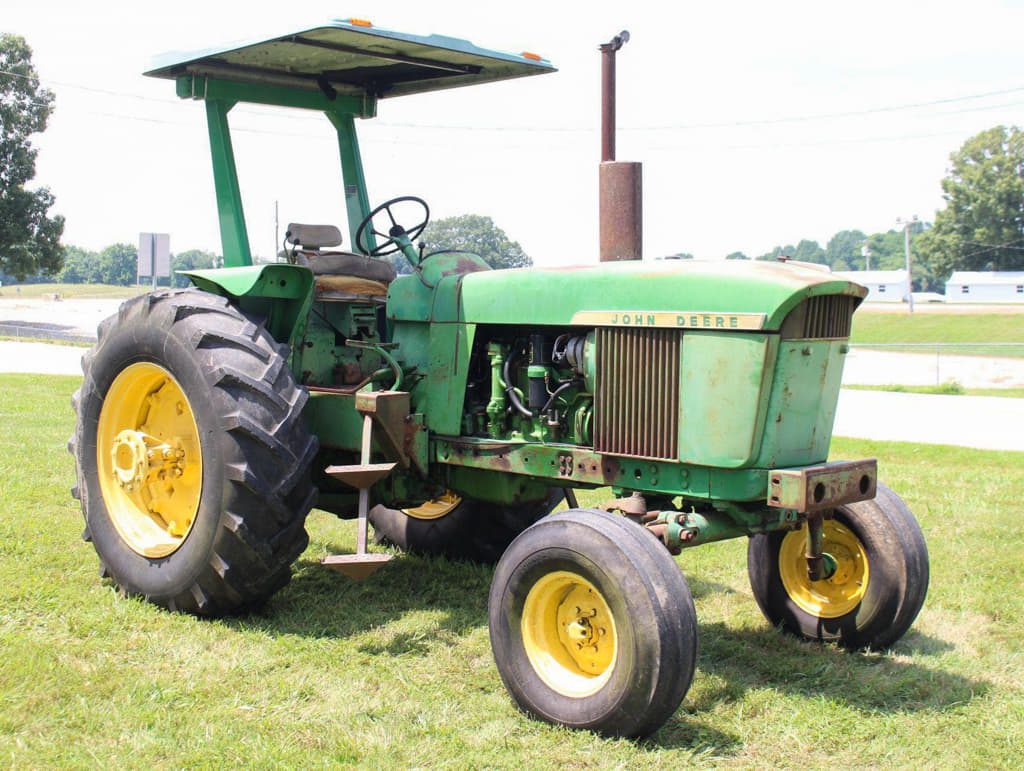
The upside to this deal is that it’s not the end of the world. At the end of the day, it’s just an information problem–and one that’s pretty easy to fix!
For a 4020, at a bare minimum, a strong listing should include (in addition to lots of photos):
Year
Transmission type
Fuel type
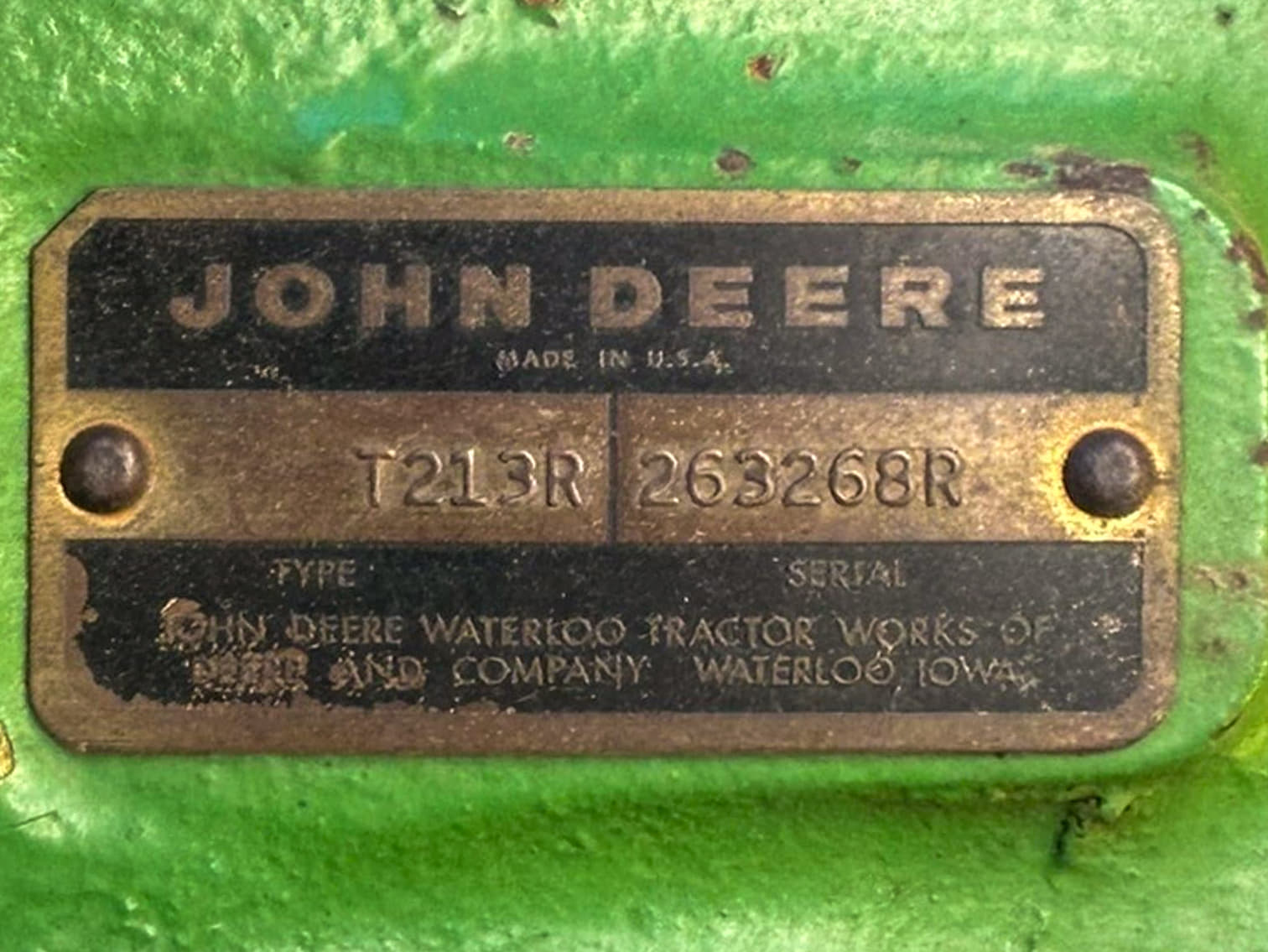
Serial number (the full serial number, not just the last part)
And if you don’t know that stuff? That’s not a dead end—so long as you have a serial tag, that’s a solvable problem. Green Collectors has an excellent breakdown of 4020 serial numbers and transmissions through their serial decoder. It’ll tell you tractor type, series, chassis production code, fuel type, and transmission type, plus the year of production. And in most cases, it won’t take more than a few minutes to look it up and figure it out.
It’s a good investment of time, because based on the data, those few minutes can be worth real money. You just have to remember to do it!
Then, once the listing goes live, take a quick look and make sure everything shows up correctly. If it doesn’t, fix it. It’s worth money in the long run.
That’s it.
If the 4020 is the most common tractor in the auction market—and it is—then getting 4020 listings right is one of the easiest ways to improve performance without changing anything else about the auction itself. It’s one of those rare situations where everybody’s interests line up perfectly. Better descriptions lead to higher bids. Higher bids lead to stronger results. Stronger results lead to higher commissions and more business.
Same tractors, but with more accurate descriptions, it opens up the pool of buyers. That leads to better outcomes.
To put it in a real dollars and cents, think about how many 4020s you sell in a given year. If you could get an extra thousand or two on the hammer price, what does that do to your commission for the year?
In my mind, for three minutes’ worth of extra effort, that’s a pretty good trade!
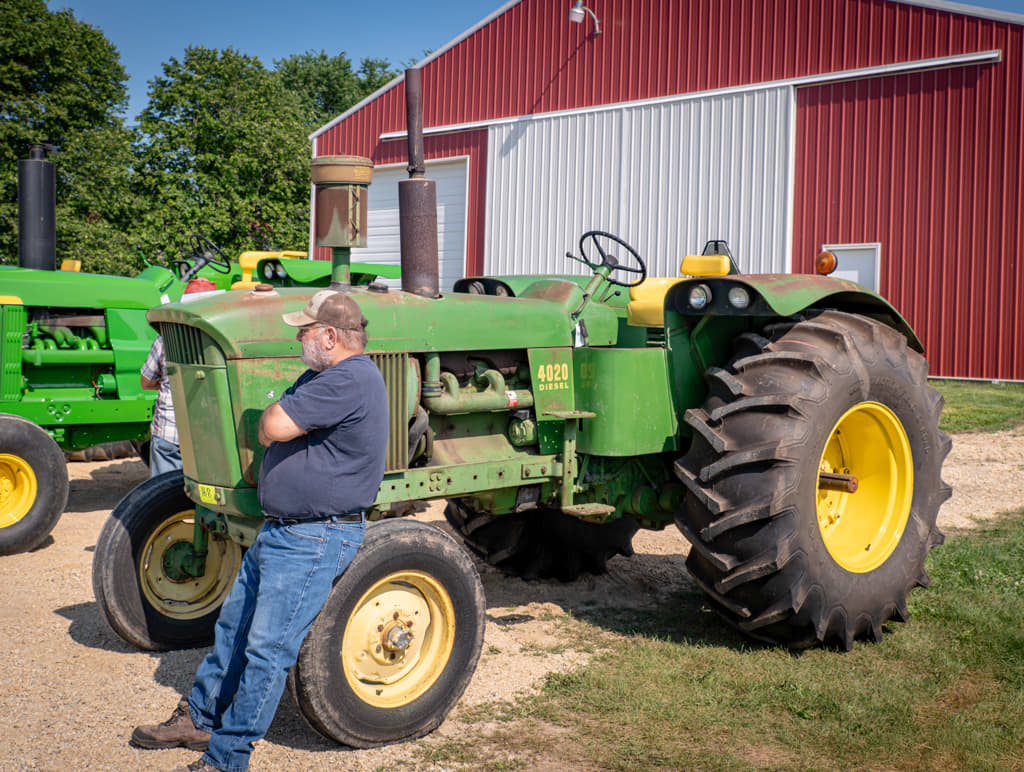
By now, some of you are probably thinking, “Good grief Ryan, if somebody can’t figure out what kind of a transmission is in a 4020, they don’t deserve to own one! Quit beating a dead horse already!”
I beat the dead horse because at the end of the day, I have the numbers to prove that a complete listing brings more money than the alternative. Furthermore, more accurate data helps the market all the way around.
And if you want to think that way, that’s fine. However, that attitude does eliminate some of your buyers. Sure, they could look through the photos to see if you included a shot of the dash or included the full serial number in the listing so they can do the homework. But at the end of the day, there’s enough 4020s out there for sale that they don’t have to–and they won’t. If you want the money out of the tractor, put in the effort and make it easy to find; it’ll pay off in the long run!
The 4020 market is strong. Demand is not the problem. Buyers are out there. In a lot of cases, the only thing standing between a good 4020 and a great sale price is clear information.
And that’s something every one of us can control.
Make it a great week, and I’ll catch you next time!
Oh, and if you’re looking for a 4020, here’s what’s listed on Tractor Zoom right now.
Illinois, Indiana, Iowa, Kansas, Michigan, Minnesota, Missouri, Nebraska, North Dakota, Ohio, South Dakota, Wisconsin
Connecticut, Delaware, Maine, Maryland, Massachusetts, New Hampshire, New Jersey, New York, Pennsylvania, Rhode Island, Vermont
Alabama, Arkansas, Florida, Georgia, Kentucky, Louisiana, Mississippi, North Carolina, South Carolina, Tennessee, Virginia, West Virginia
Arizona, New Mexico, Oklahoma, Texas
Alaska, California, Colorado, Hawaii, Idaho, Montana, Nevada, Oregon, Utah, Washington, Wyoming
Discover why ag equipment buyers are choosing Tractor Zoom as the go-to-platform for securing their next equipment loan.